Project story
Creating opportunity together
1. Executive Summary
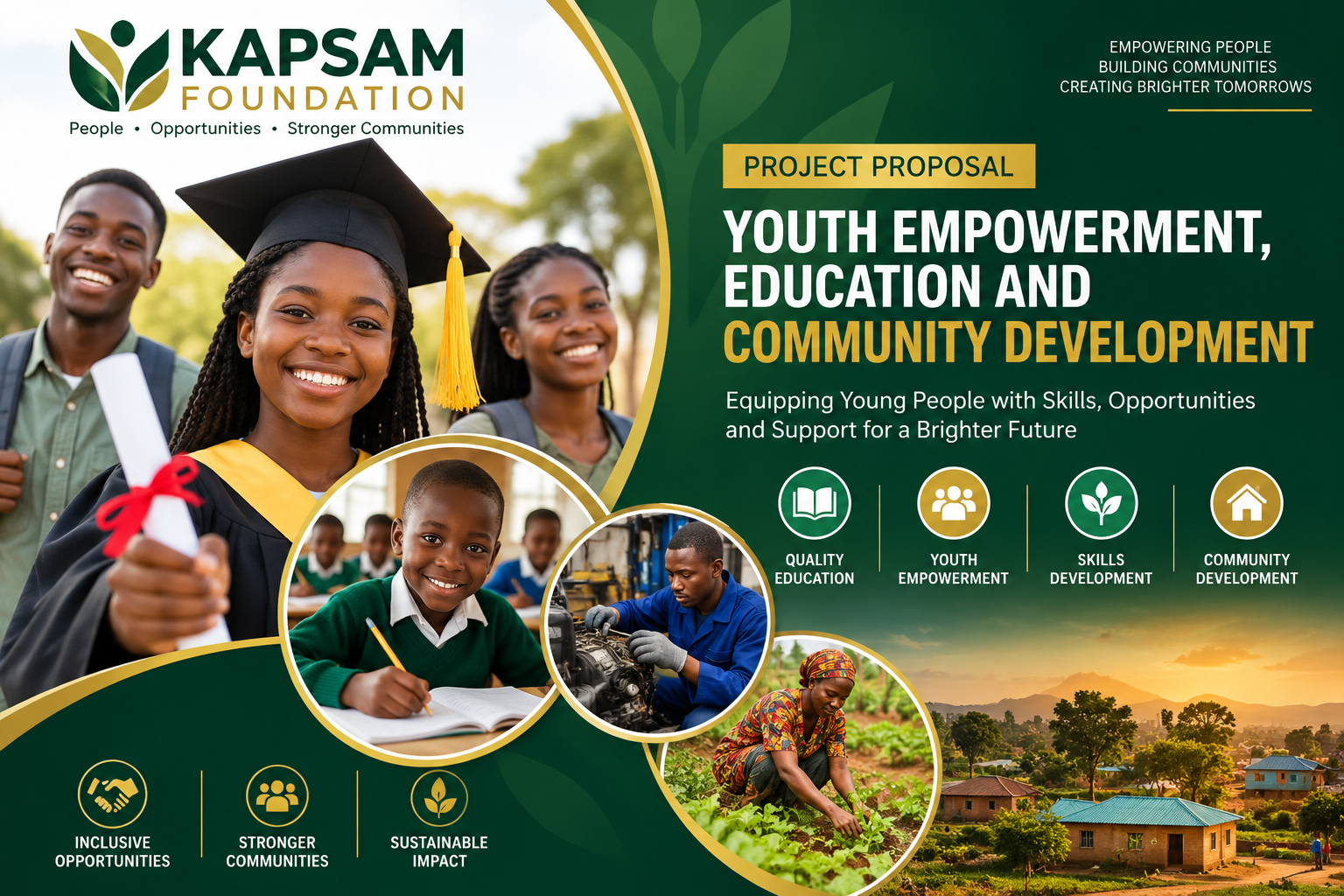
Kapsam Foundation proposes the Youth Empowerment, Education and Community Development Project to expand educational opportunities, strengthen practical skills, improve youth participation and support sustainable community development.
Many young people and vulnerable households face barriers to education, skills acquisition, employment opportunities and access to essential resources. Addressing these challenges requires a coordinated approach that combines learning support, practical training, mentorship, livelihood development and community participation.
Through this proposed 12-month initiative, Kapsam Foundation will work with community stakeholders, schools, trainers, volunteers and funding partners to implement activities that respond to locally identified needs.
The project will focus on four interconnected areas: quality education, youth empowerment, skills development and community development. Activities will be designed to promote inclusion, dignity, accountability and long-term community resilience.
Kapsam Foundation seeks financial and technical partnerships to implement the project and establish a foundation for sustainable, measurable impact.
2. Background and Rationale
Education and practical skills can help young people improve their prospects and participate more effectively in their communities. However, barriers such as financial hardship, limited access to training, inadequate learning resources and restricted livelihood opportunities can prevent individuals from reaching their potential.
Community development also depends on the ability of households and local groups to access opportunities, participate in decision-making and develop sustainable ways of improving their circumstances.
This project responds to these challenges through an integrated community-based approach. Rather than treating education, employment readiness and community welfare as separate issues, it connects them through coordinated activities and partnerships.
The project will begin with a needs assessment to identify priority communities, beneficiary groups and available local resources. Final activities and targets will be adjusted according to the findings and the funding secured.
3. Project Goal
To improve educational access, practical skills, youth participation and community resilience through inclusive, locally driven development initiatives.
4. Specific Objectives
Improve educational opportunities: Support vulnerable learners with appropriate educational materials, learning activities and referrals to relevant services.
Strengthen youth employability: Provide practical skills training, career guidance, mentorship and opportunities for work readiness.
Promote livelihood development: Connect eligible participants with entrepreneurship education, livelihood training and relevant local opportunities.
Support community development: Encourage community participation in initiatives that address locally identified priorities.
Build sustainable partnerships: Engage schools, community organisations, businesses, volunteers and donors to strengthen project delivery.
5. Target Beneficiaries
The project will prioritise beneficiaries identified through a transparent community assessment.
Young people seeking skills, career guidance or livelihood opportunities.
Children and learners from vulnerable households who require educational support.
Young women and other groups experiencing barriers to participation.
Families facing social or economic challenges.
Community groups interested in sustainable development activities.
Proposed initial reach: 200 direct beneficiaries, subject to needs assessment, delivery capacity and funding availability. Indirect beneficiaries may include family members and wider community networks.
6. Project Components and Activities
Component 1: Education and Learning Support
Activities:
Identify learners experiencing educational barriers.
Provide approved learning materials and educational support where resources permit.
Organise educational guidance, reading activities and learning workshops.
Engage schools, educators and caregivers to encourage continued participation.
Refer eligible learners to existing educational or social support programmes where appropriate.
Expected result: Improved access to learning resources and stronger engagement with educational opportunities among supported learners.